

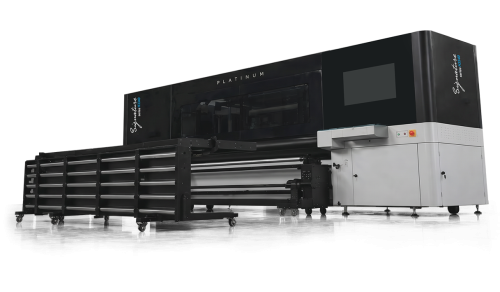

Print head maintenance is the single most undervalued line item in any production print operation. Operators tend to react — only when nozzles drop or banding shows up — instead of running a small, consistent ritual that prevents the problem from ever surfacing.
Over the last decade we've seen the same mistakes in shop after shop: rushed shutdowns, skipped wipes, capping stations left dry. The fix isn't expensive. It's just a 15-minute discipline, every day. Here's what we recommend.
The daily five-minute check
At end of shift — not start of next shift — every operator should run the same sequence. Five minutes, every day. Consistency beats thoroughness in this part of the routine.
- Run a nozzle check pattern, photograph it, save it to the day's folder
- Wipe the head face with the manufacturer-approved swab — never paper or shop towel
- Verify the capping station is wet: a dry capping station kills heads
- Check waste ink levels and empty if above two-thirds
- Cap, park, and lock the head before powering down
If a nozzle check shows missing lines, don't just run a clean cycle and move on. Photograph it, run a clean, photograph again. The pattern of recovery is more diagnostic than the failure itself.
Weekly: the deep clean
Once a week — pick a day and stick to it — strip the head face down properly. This is the part operators dread, but skipping it is the leading cause of premature head replacement. Keep records.
"A weekly deep clean costs you 30 minutes. A premature head replacement costs you the head, plus four hours of downtime, plus the engineer call-out. The math isn't close."Mehmet Demir · Senior Service Engineer
What "deep clean" actually means
It's not a longer version of the daily wipe. It's a different procedure: cap removal, flush line inspection, dampener seat check, and capping pad replacement if it's showing wear. The photo gallery below shows the points to inspect.
Monthly: the full audit
Once a month, pull the head off the carriage and inspect everything: alignment, cable seating, datum points, encoder strip cleanliness. Replace anything that looks marginal — wear isn't linear, and a part that's 80% gone today fails completely next week.
The simple rule
If you run the daily five-minute check, the weekly deep clean, and the monthly audit, a Platinum print head will outlast its rated life by a factor of two to three. We've seen heads in field operation past 8,000 hours when the routine is followed. We've also seen heads die at 800 hours when it isn't.
Discipline is cheap. Replacement is not.